

content (page 3)
Browse by topic:
-
-

Corridor – interior patio
The corridor, about three meters wide, unifies the three halls and at the same time is used as an exhibition space. The natural lighting is abundant: the side towards the inner central atrium of the museum, is glass-barred On display are marble architectural elements, a statue of a Roman official, a statue of a cloak…
-

Finds from the countryside (periphery) of Elis
Next to the staircase and the large glass panel that allows a view of the plain of Elis, the hall with the wooden floor (parquet) which was originally designed to host temporary exhibitions, presents ancient artifacts from various archaeological sites on the periphery of the city of Elis and linked to settlements and small communities…
-

Hall II: Art and Crafts
from the Classical to the late Roman period (480 BC-330 AD). On display findings related to the theatre (masks, depictions, tickets, etc.), representative examples of clay figurines and statuettes, decorative reliefs of clay and bronze vessels, and marble sculpture and coins. Large bronze urns stand out. The exhibition includes vases with relief and painted decoration,…
-

Hall III: Daily Life, Public Life, Worship and the Olympic Games
from the classical to the late Roman era (480-330 AD). On display the visitor will see jewelry (earrings, rings, necklaces, buckles and pins, plates with embossed representations) made of gold, silver and bronze, bronze mirrors from the 4th and 3rd centuries BC, hairpins, cochleae, etc., figurines with characteristic hairstyles of the Hellenistic era, Megarian skyphoi…
-
Visit to the site and museum of Elis
archaeological site of Elis Opening hours: 08.30 – 15.30. Free Entry Archaeological Museum of Elis Opening hours : 08.30 – 15.30 Ticket price: 5 euros Reduced : 3 euros archaeological collection of Elis Opening hours : 08.30 – 15.30 Free Entry places of interest
-

The Sacred Way and the magnificent Sacred Procession of the Olympic Games
Elis was the city responsible for organizing and holding the famous Olympic Games of antiquity. Athletes who wished to take part in the Games had to present themselves at least forty days before their start in the city of Elis, the capital of the ancient state of Elis, in whose territory the Panhellenic Sanctuary of…
-

Hall I.: Site, Prehistory, Buildings and Professions
It covers a period from the Paleolithic to the late Roman era (100,000 – 330 AD). On display is the skull of an extinct wild animal that lived in the area, tools of chipped stone from the Paleolithic era, representative findings of the prehistory and early history of Elis dating from the 4th millennium to…
-

The Museum complex
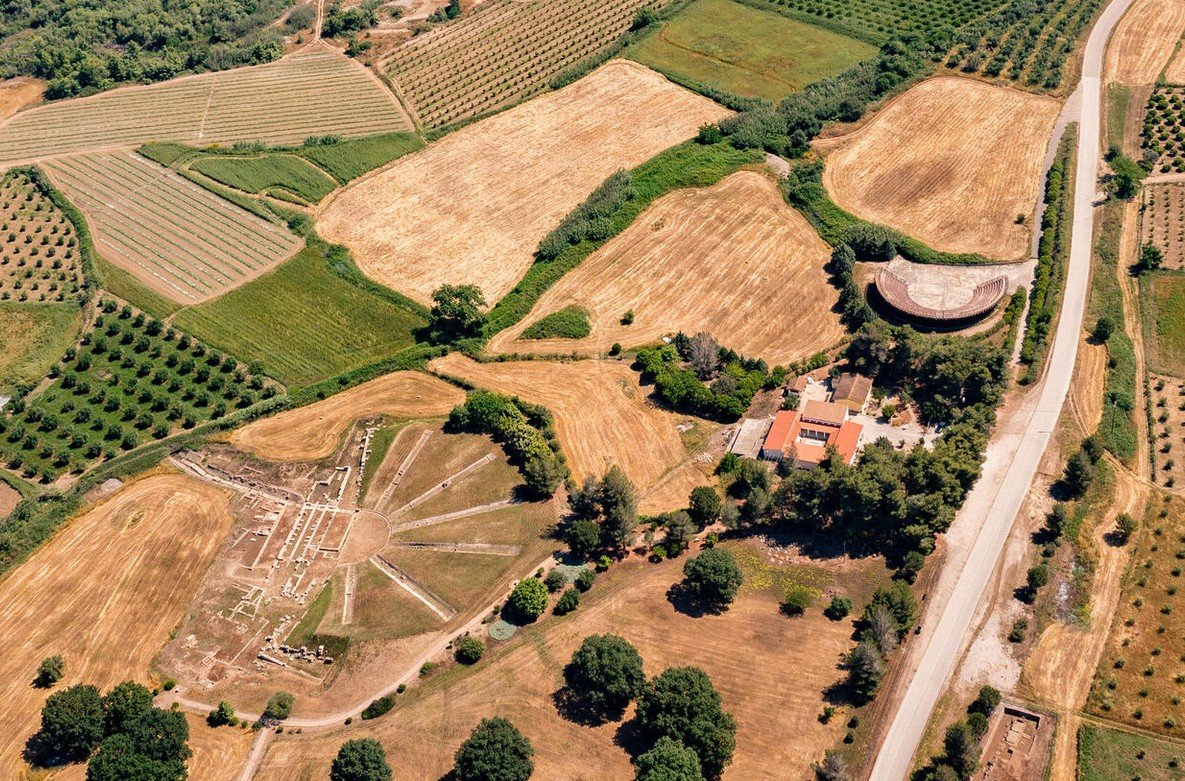
The spot offers panoramic views of the fertile plain of eLIS and the archaeological site. The elegant and harmonized with the natural environment bioclimatic building that houses the archaeological museum was erected between 2002 and 2004 at the foot of the ancient acropolis of Elis (Kaloskopi hill) in application of the architectural study of the…
